The Quant Skills Gap: Are You Prepared for the Impact of AI?
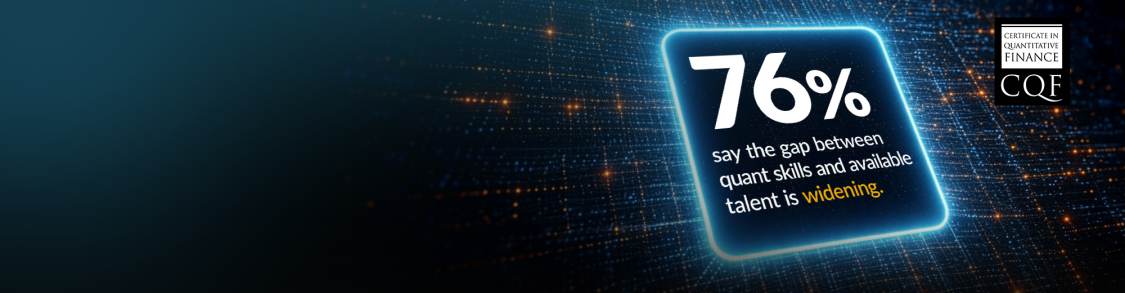
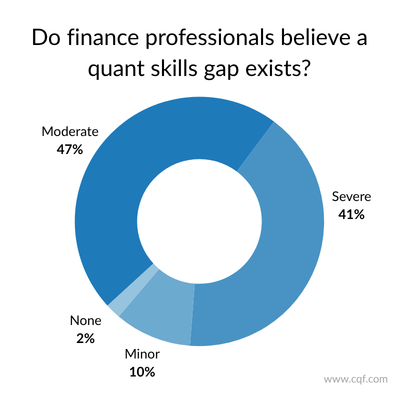
88% of quant finance professionals believe a skills gap exists - and 76% say it's getting worse. New research from the CQF Institute (awarding body of the Certificate in Quantitative Finance) reveals how AI is reshaping the industry and how you can leverage this gap to your advantage.
Quantitative finance is facing an unprecedented skills shortage. As artificial intelligence (AI) transforms core functions - from trading to risk management - the gap between the skills employers need and the talent available is widening rapidly.
The data is clear:
- 88% of quant professionals believe a skills gap exists
- 76% say that gap has widened in recent years
- 55% report hiring strong quant professionals is difficult
The truth is, that if you are not now actively upskilling, then you are falling behind.
AI is Changing Everything
Your Role is Expanding Fast
AI is fundamentally reshaping what quant professionals do every day:
- 52% now use AI daily in their work
- 59% say AI has already expanded their job responsibilities
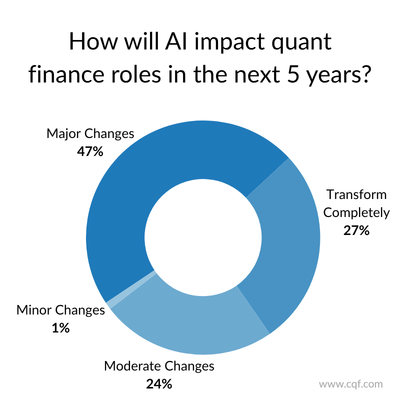
- 74% predict AI will drive major transformation within the next five years
The technical bar is rising. Professionals are now expected to not only use AI tools but understand the models behind them, validate outputs, and integrate them into production environments. This means developing expertise in machine learning theory, advanced Python programming, model validation methodologies, and AI governance - skills that bridge quantitative foundations with practical deployment.
The Quant Skills Employers Can't Find
Where Hiring Pressure is Most Acute
Which quant roles are hardest to fill?
Respondents identify several roles as especially hard to fill, reflecting the increasing convergence of quantitative finance, software development, and machine learning:
- Quant Developer (22%)
- Quant Researcher (18%)
- Machine Learning Engineer (16%)
Which quant skills are most scarce?
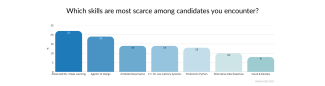
Beyond job titles, respondents point to shortages in specific technical capabilities that have become critical as AI adoption deepens:
- Advanced Machine Learning (22%)
- Agentic AI design (19%)
- AI model governance (14%)
- Low-latency C++ systems (14%)
- Production Python (13%)
The gap is clear: firms are searching for professionals who can operate at the intersection of finance, machine learning, and production-level engineering.
Your University Education is not Enough
Education and Industry Requirements are Diverging
The data reveals:
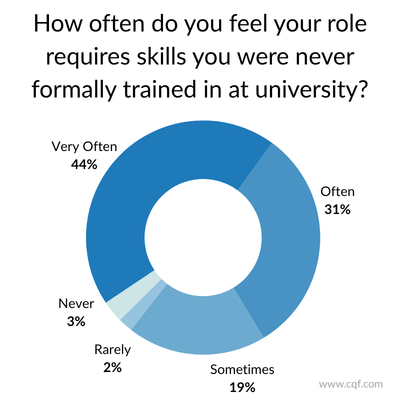
- 75% say their role requires skills not taught at university
- 90% say university education has not kept pace with industry needs
- Fewer than 9% of professionals think new graduates are well-equipped for AI and machine learning challenges
Where professionals report the greatest learning gap:
- Advanced Machine Learning (27%)
- Agentic AI systems (24%)
- Production model deployment (13%)
The message is clear: postgraduate education and continuous learning are no longer optional - they're essential.
Continuous Upskilling is Mandatory
How to Stay Competitive in an AI-Driven Market
Your peers are already taking action:
- 84% say continuous reskilling is mandatory
- 31% spend more than 20 hours per month upskilling
As finance roles evolve and AI becomes more embedded, professionals who commit to structured, ongoing learning will be the ones who advance.
Build the Skills Employers are Searching For
Advance Your Career with the Certificate in Quantitative Finance (CQF)
The Certificate in Quantitative Finance (CQF) is designed specifically to address the skills gap identified in this research. As the world's leading master's-level professional qualification in quant finance, the CQF focuses on the practical quantitative and computational capabilities that modern finance roles demand.
Industry-Aligned Curriculum: The CQF syllabus is updated quarterly to reflect market need, and covers the exact skills employers are looking for.
Practitioner-Led Faculty: The CQF is taught by practitioners using these skills, meaning you learn the assumptions, limitations, and use cases of techniques.
Flexible, Part-Time Format: The industry is moving fast. The CQF is online, part-time - so you can study without taking time out of industry.
Lifelong Learning: The research shows it is essential to continuously upskill. Alumni have access to masterclasses and the latest CQF curriculum forever.
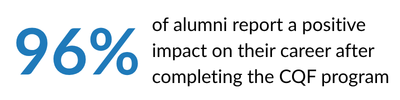
Proven Results: Thousands of professionals around the world have trusted the CQF to teach them the cutting-edge skills they needed to succeed.
Don't get left behind! The skills gap is widening. The professionals who thrive will be those who commit to continuous learning.
The next CQF program starts 25th June 2026. Download our brochure today to start your journey.
Find out more about the Certificate in Quantitative Finance
The CQF is the essential designation for professionals looking to start or advance a career in quant finance.
Download our brochure to learn more.
* Required fields
Methodology and Data Sources:
- Survey: CQF Institute Quant Finance Careers Survey (2026)
- Sample size: 135 quantitative finance professionals (global)
- Notes: Percentages rounded to whole numbers. Some questions allowed multiple selections.