

An Interview with a VP in Market, Liquidity, and Model Risk Management
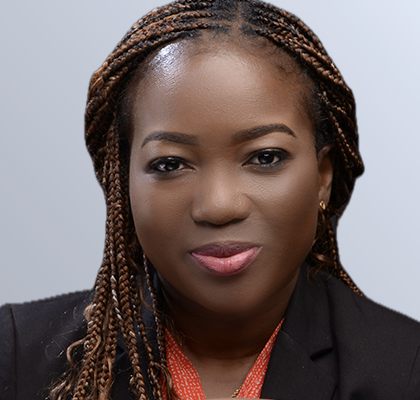
CQF alumna, Adetoun Bejide, is the Vice President for Market, Liquidity, and Model Risk Management with Innovation Federal Credit Union in Canada. She completed the CQF in 2024. We spoke to Adetoun about starting a quant finance career, the CQF, and her advice to future professionals.
What inspired you to pursue a career as a quant and how did you get started?
My background was in engineering. Numbers just resonated with me - right from my early days. When I started my career in banking, I worked in market and liquidity risk, mostly traded market risk. It entailed a lot of numbers, and I wanted to really understand the market. I always wanted to know what we were doing, why we were doing that, and what the best practices were. So, I always had that natural curiosity. That's what has pushed me to deepen my quantitative skills, especially in statistics and machine learning. That's what pushed me, or challenged me, to become a quant.
So, the CQF has been very critical to my career. It's helped me transition into model risk management, which is something I really enjoy doing right now.
How did the CQF program impact your career trajectory?
First of all, it was no small feat. I always wanted to know what I should do next in my career and how I could get better. When I found the CQF and looked through the program outline, every single thing was in there - I loved everything about it. It gave me a great technical foundation. It improved my confidence in engaging with more complex models, derivative pricing, and machine learning applications in finance and risk management. It changed how I look at things. I like to break things down into smaller problems to figure out, but the CQF really trained me and helped me understand a lot of assumptions. It helped me know when to challenge those assumptions. It has been critical in my current role because I do a bit of model risk management and it's helped me to challenge models. It made me realize that it's not enough to just be able to build a model, you have to be able to challenge it appropriately and adequately too. So, the CQF has been very critical to my career. It's helped me transition into model risk management, which is something I really enjoy doing right now.
Can you describe a typical working day in your role and what do you enjoy the most?
For me, there is not really a typical working day, and I think that's what I love about my job. No two days are the same. It's different every single time. Sometimes I look after market liquidity and model risk, but sometimes I have to do risk oversight and look at risk analytics. I look at strategy too. I could spend a day reviewing model validation work and engaging with several teams on stress testing. I also do a bit of capital management, where I look at various things, trying to improve our overall model risk management framework, in line with regulatory expectations. What I enjoy most about what I do is being able to influence a lot of decision making at a strategic level. It’s very interesting when you're in management and you're able to make those sorts of strategic decisions that impact the entire organization.
What's the most interesting or challenging project you've worked on?
This goes back several years in my career. I love trying to figure out how things work and trying to break things down into smaller bits to help me understand better and to see if the system is doing exactly what it should be doing. I worked on a project where I had to investigate a trading system that was acting erratically. I replicated it on several spreadsheets and even embedded a lot of programming language around it, trying to recreate exactly what the trading system was doing. That was very challenging because I had to look at various risk metrics. It was like building different parts and trying to interconnect everything again to make it work. So, that was quite challenging, and I really did enjoy it. Currently, I am also trying to build out a model risk management framework from scratch, along with some regulatory guidelines. It's been a lot of complex work, especially trying to build a system that helps manage the end-to-end processes. It's required a lot of technical skills and trying to balance practicality in the implementation.
What skills or knowledge gained from the CQF do you find most valuable in your role?
I acquired many skills from the CQF. One thing I enjoyed very much was the stochastic modeling. I really loved time series analysis. I enjoyed learning how to write a lot of programs using different machine learning techniques. I learned a new skill, which was how to use Python. A lot of tools that the CQF has made available to me have helped strengthen my ability to do my work critically and properly.
How are you using AI in your current role?
We're beginning to see increasing exploration of AI in a few areas, starting with fraud. Previously, we used generative AI to streamline documentation and reporting, but now, more interestingly, we're looking at how we can use AI to support a lot of processes, assist with identifying gaps, and generally support our regulatory reporting. I think the main issues have focused on implementing proper governance, embedding model risk in AI systems, trying to understand the biases of the models, and the explainability of that model. It's something my organization is really looking at, especially agentic AI.
What do you think will be the next big topic for AI and quant finance?
I think in quant finance, it would be using AI to design different kinds of workflows, especially decision-making workflows. I think AI could be generating a lot more insights than it is. I think it could even be used for model development and validation. I wonder how that would work, but I strongly believe that could be a major focus around AI. I think we will begin to see a lot more AI use in complex models and this will lead to less interpretability. Institutions will need to develop robust frameworks around how to manage and use this though - there will need to be more regulatory expectations.
What advice would you give to someone looking to enter quant finance?
My best advice would be, first off, to build a solid foundation in statistics, probability, and programming. Second of all, I think what has really helped me in my career has been my ability to question the assumptions and limitations of the models. So, having that mindset of always trying to challenge things, stay curious, be adaptable, that is something that would be useful for anyone who wants to go into this field.
Find out more about careers in quantitative finance
Download the Careers Guide to Quantitative Finance to learn more about the typical skills needed and salaries earned across six quantitative finance career paths.