

An Interview with a Systematic Equity Portfolio Manager
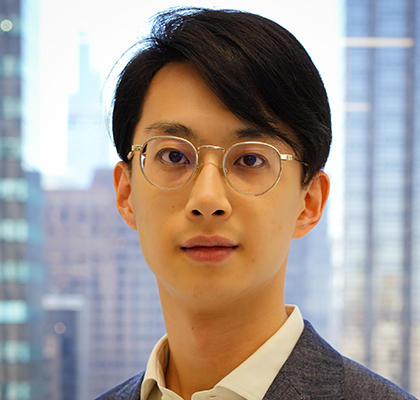
CQF alumnus, Troy Gao, is a Systematic Equity Portfolio Manager at Balyasny Asset Management in the US. We spoke to Troy about his typical working day, the most interesting project he has worked on, and the skills he gained from the CQF.
What inspired you to pursue a career as a quant?
I was always very interested in math, and I always wanted to pursue a career where I could combine math and finance. I wasn't aware of the concept of a quant back then, and when I was introduced to quant finance, I was immediately fascinated. I chose to participate in an experimental program in undergrad, and so I majored in math and finance in college. That's how everything began.
When I was introduced to CQF in 2015, I saw an opportunity to learn what I could in an MFE program and at the same time spend my grad school years doing statistical research and focusing more on big data analysis tools.
How did the CQF program impact your career trajectory?
I learned about the CQF program when I was doing an internship at a Chinese hedge fund, at the beginning of the private equity era in China. I was a junior college student, and I was debating whether I should pursue a master’s in financial engineering or participate in a statistical program, which would give me more capability in handling real-world data science. When I was introduced to CQF in 2015, I saw an opportunity to learn what I could in an MFE program and at the same time spend my grad school years doing statistical research and focusing more on big data analysis tools. That's why I chose the CQF program. It has helped me bridge the gap between the two.
Can you describe a typical working day in your role?
Usually, I spend early mornings on due diligence and pre-trade preparations. For my research, the work starts around 10:00 AM. Typically, I spend 50% of my time on data research and other portfolio research, and about 30% on reviewing the work and research outputs of my teammates. The final 20% is spent on miscellaneous stuff. Out of all the work, the alpha research is still the most fun because it is so pure. The data is so innovative. I can spend lots of time working with assets and understanding the potential of new datasets in the industry, and it is always very challenging and exciting.
What's the most interesting or challenging project you've worked on?
The very first alpha research project I worked on as an intern. It's not that the magnitude or the scale of the project was large. It was just the very first, real-world project I worked on, and I knew there was going to be real dollars running behind those signals. So, every bit of detail mattered. I needed to make sure all of the assumptions were realistic and everything was done accurately. Also, I applied all the theoretical knowledge I learned from school and the CQF program to real world data sets. That translation of the skillset was very interesting. It was the very first project I worked on, and it is still the most enlightening.
What skills or knowledge gained from the CQF do you find most valuable in your role?
All the math modules were very interesting, especially the stochastic calculus modules, but the most useful was the sixth module. I chose to learn more about portfolio construction and optimization. I already had experience learning about performance theories in college, but the knowledge was quite theoretical and superficial for actual portfolio management. The CQF helped me because I learned the theories and then projects helped me understand the execution. This knowledge eventually helped me do more factor analysis and risk management on portfolio research, which has been very helpful.
How are you using AI in your role?
We have a very strong applied team, and they have been helping us adopt AI. I have used it to learn more about industries and companies from the perspective of fundamental researchers. Using it for code has been a real game changer for us too, especially for programming. Now we can do coding much faster.
What do you think will be the next big topic for AI in quant finance?
I think the capability of developing and running actual math and staffing models will be a game changer. As of right now, most AI agents are still language model based. Intrinsically they don't have a strong capability for doing math, or when they are doing math inferencing, they are based on language models, not actual calculations. If the AI models can run the actual calculations and computations in the back, like coding does, that would be a real advance.
What advice would you give to someone looking to enter this field?
Know what your edges are. With the advent of AI, the junior workers whose only strength is getting things done is no longer sufficient. These days, people are looking for talent with in-depth domain knowledge who can utilize the new technology to improve their productivity and quality of their work.
Find out more about careers in quantitative finance
Download the Careers Guide to Quantitative Finance to learn more about the typical skills needed and salaries earned across six quantitative finance career paths.