

An Interview with a Quant Dev Analyst
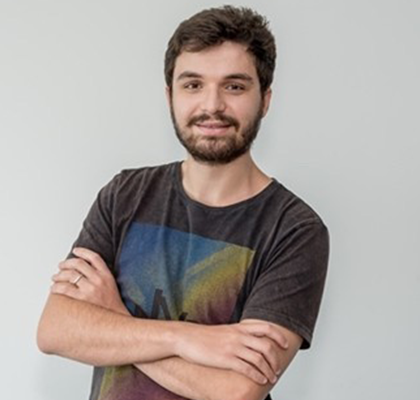
CQF alumnus, Daniel Ximenes, is a Quant Dev Analyst at XP Inc. in Sao Paulo, Brazil where he builds infrastructure systems for trading, sales, and treasury teams. We spoke to Daniel about starting his career as a quant, where he uses AI in his role, and the importance of staying curious.
What inspired you to pursue a career as a quant?
I didn't initially pursue a career in finance. I used to work for a data analytics company. During the pandemic I got laid off, but they sent my resume to a brokerage firm as they had connections there. At the time, I knew nothing about finance, but they gave me the opportunity to come in and learn. So, I was able to study up on derivatives, options, swaps, and all sorts of products that I didn't know about before. I got super interested in it because it's so profound, interesting, and challenging.
As I got more involved with the fund, I decided to pursue the CQF so I could spend more time on the funds and less as a software developer. I started working as a sales derivatives software developer, helping with the automation processes. After some time, I started working with a new system that was built from scratch. We had a bunch of spreadsheets that were used as systems for pricing derivatives and for communication between teams. They needed to develop an RFQ system, where sales could describe the financial products that they wanted to sell to institutional and retail sales teams, and the traders could analyze the spread and volatility. The goal was to develop this system, create our spread strategy, allow faster communication, and enable teams to book these trades more effectively. We worked in a team to develop more robust systems and that was one of my first projects.
The CQF was very important in this, because originally, I would see all these numbers and be unable to explain to the trader if they were wrong or right. They might have had questions, and I would have been unable to answer them. The CQF helped me to understand how these derivatives are priced, how these instruments are priced, how they are presented, the different names, and the terminology. I am a tech guy, but I work directly with business guys, traders, and sales. So, understanding how they think is very important and having this background of studying was valuable. The CQF was a safe choice. I could do it while working full time and learn from experienced professionals. This helped me a lot.
One of the important things to learn is that you can change careers, and I believe that having the CQF helped me pursue new opportunities in my transition.
Can you describe a typical working day in your role and what you enjoy the most?
I work at the intersection between development and trading. This means a lot of coding, 60 - 70% of my time is spent coding, and 20% of my time is spent assessing the systems because there are new products that come into play all the time. Now we have commodities and offshore stocks, for example, and we are designing a new engine to quote these products.
What is the most interesting or challenging project you've worked on?
The most interesting was the RFQ system because it was a blank page. We had to design it from scratch and talk directly to the business. So, I learned a lot. If you're developing new software, you have to understand why you're doing it. You have to see what the guys who are going to use the software are saying, and you need to understand their problems and how you're going to fix those problems effectively. In the end, you need to improve the market. At the beginning, they used to sell primarily retail derivatives, and they didn't have any online process for that, so we had to develop one from scratch. It was very risky, very stressful, and very interesting, and in the end, the system worked really well.
What skills or knowledge gained from the CQF do you find most valuable in your role?
The CQF helped me to understand both the business and technical side. You and your team can frequently get insights by evaluating computer graphics, numbers, modeling data, or by listening to stakeholders and seeing their thought processes. These things can help you to develop your own processes. But sometimes you can’t just read something in a book; sometimes you will need to learn with the pressure with tons of things happening live. So, this has helped me a lot. It also helped me feel more confident, especially when it comes to understanding how these products and derivatives work.
How are you using AI in your current role?
The sell side is dependent on reliability. So, designing reliable systems is extremely important for every sell side company, and the problem with AI now is that it is not necessarily reliable. You should build your systems and then use AI to automate some processes. In my daily work, it helps me to write code faster, build more tests so I can be confident in the code, and find mistakes early. But I don't rely on AI initially. I tend to think first, build something first, and come up with the first version of the code. Then, I try to have a dialogue with the AI, where I present what I was thinking and it may question me or propose changes. Sometimes that works better than using AI to build the whole thing from scratch. For me, it's better if you do some work first because you have to understand what you are doing. If you just use AI, (and rely on it for everything) you may end up not understanding and it's easier to for the AI to hallucinate, or to start creating things that don't make sense.
What do you think will be the next big topic in AI for quant finance?
Once AI becomes more reliable, it may become useful in most of the manual trading processes, like having to hedge the position constantly, or the high frequency trading teams that have to trade so rapidly. If AI is able to take over some automation, the systems will work more independently and then the trading and sales teams will have more time to think about complex new products, derivatives, designs, and improvements. So, I think you could take the more repetitive parts of the job to AI and devote more human time to other things.
What advice would you give to someone looking to enter the field of quantitative finance?
First, have curiosity because this curiosity will allow you to reach a space where, as you've researched more, there's even more to research. It's fun because you’re constantly studying and learning from people.
Second, don't rely too much on AI. Try to build things by yourself. Over the past five years, I just built the projects from scratch with the team. It's amazing feeling when it’s done. So just build things. This is what keeps you interested in this field and this is what gives you the results. Also, it is what companies expect from you, for you to build things that give them results. My background was in physics, so I didn't have a programming background, but I wanted to become a good programmer, I wanted to write new code. It is very important that you don't just go to AI for your code because you won't understand when it breaks. You need to learn how to analyze and fix things yourself.
Find out more about careers in quantitative finance
Download the Careers Guide to Quantitative Finance to learn more about the typical skills needed and salaries earned across six quantitative finance career paths.