

An Interview with a Head of Risk Management
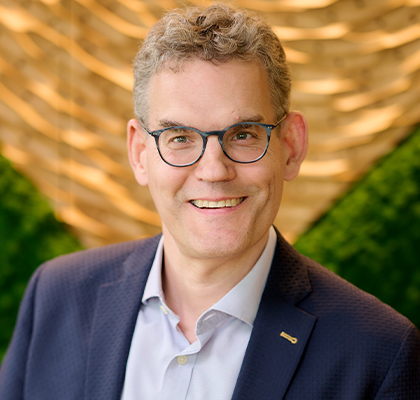
CQF alumnus, Christoph Maixner, is the Head of Risk Management at BNP Paribas Asset Management (previously AXA Investment Managers) in Germany. He did the CQF in 2009, when the subprime crisis took its toll on the financial markets. We spoke to Christoph about becoming a quant, the beauty of mathematics, and his advice to aspiring quants.
What inspired you to pursue a career as a quant?
It started over 30 years ago when I started an apprenticeship at a bank. I was introduced to derivatives trading and became interested in financial instruments. During my studies at university, I dug into financial derivatives and econometrics. Then I looked for a job where I could apply my quantitative skills. I started in risk management for the FX and commodities desk at a local bank in Germany. Over time, I started modeling financial instruments, and I took a role at the bank to implement the new instruments into a risk management system. I came across the CQF and knew this could be good to get more in-depth knowledge. At that time, lots of mathematicians, physicists, and engineers were in the field, so it was not easy to get respect as an outsider. I was OK because I had a quantitative background in terms of econometrics, but I was not a mathematician or physicist by trade, so I always lacked the knowledge of those “real quants”. I took the CQF to get more of an understanding of how they think. For me, it was important to understand what they were talking about and translate this into something where I could explain complex aspects to senior management in an easier way. The CQF was the right path for this purpose.
How did the CQF program impact your career trajectory?
It strengthened my knowledge and awareness and helped me to discuss a lot of topics within the professional environment. I also found, at some point, that it was important to move away from this deep dive into real quant topics, and focus more on managing the general aspects around risk management tools. When you develop a systems environment, you need to take care of the practical side. We do not do everything for the sake of mathematical beauty because there's a purpose to our measurements – to make risk reporting more accurate and to inform senior management about the inherent risks in portfolios, bank accounts, and liabilities. It’s not necessary to calculate something out to the 4th or 5th digit. It's more important to have the correct number.
Can you describe a typical working day in your role?
I wouldn't say there is a typical working day because, in my current role, I do not do much standard day-to-day business, but usually I share reports with the team, reach out to the portfolio managers, discuss their positioning in their portfolios, and collaborate on a global level across the company because most of the teams are located in Paris, UK, US, and elsewhere. I am also involved in several projects to migrate to new system environments. Of course, you always have to deal with external auditors and the regulators because they also reach out on occasion. One additional thing I have been working on during the last two to three years is implementing new regulatory requirements around liquidity management and SFDR because, in Germany, we have a lot going on with sustainability reporting and environmental risks. There are different things I have to tackle every day, and you never know what will come up next, especially in times like this, when there are challenges on the macroeconomic level around the globe. At the end of the day, we are all interested in what the PnL will be at the end of the year, so, of course, management will turn to risk management and ask for guidance. This is the area that I most enjoy, combining quantitative skills with economic ideas and helping to shape the evolution of the company. As a risk manager, you not only need to tick the boxes, but must add value as well.
What's one of the most interesting projects you've worked on?
I was at my former employer; we were implementing a risk management system. That project was very interesting because you had to understand the technical and quantitative aspects and translate them into an outcome for reporting. Today, the most interesting and challenging thing is our transition from our old environment to BNP Paribas Asset Management. We need to get up to speed within the new company quickly as it will give us a lot of new opportunities and resources to draw on.
For my current job, the most important thing is to understand the language, know what the flaws and advantages are, and choose the solutions that serve our needs best. Without the CQF, I wouldn't have understood that as clearly as I do.
What skills gained from the CQF do you find most valuable in your role?
The insights into differential calculus and other aspects of the mathematics behind quant finance. When we had to do the math, it was always a kind of puzzle to do the derivations and see how everything comes together. It shows the beauty of mathematics and what you can achieve with it. For my current job, the most important thing is to understand the language, know what the flaws and advantages are, and choose the solutions that serve our needs best. Without the CQF, I wouldn't have understood that as clearly as I do.
How are you using AI in your role?
I think it will take time to research AI to understand what it can do. It reminds me of the time when the iPhone changed the way we communicate with each other, or even earlier, looking at the advent of the internet. At the beginning, everyone played with it and then after some years, everyone started to understand where it can really bring value. I think it's the same with AI. Currently, we use it to translate documents and obtain information from a collection of files. In former times, you programmed a code in Excel or VBA, but it was very time consuming. Today you can get some Python code and use it to retrieve information without having to code everything by hand. It's also very helpful for summarizing topics in an efficient manner, so that you can prepare a presentation or brief document. However, you always have to be very careful with the information you receive. You should have a certain understanding of the topic already, so you can tell whether the output is good or not. For people who are getting into the quant finance, banking, or asset management environment now, it is important to get familiar with how AI works; you have to think seriously about it because AI is just getting information from the internet and putting it together in a way that is helpful for you.
What do you think will be the next big topic for AI and quant finance?
I think we are still in sandbox days. We're playing around trying to figure out what the utility is now and will be in the future.
What advice would you give to someone looking to enter the field these days?
Stay curious. Use quantitative skills for a purpose and not just for the beauty of it. This is the most important thing that I learned. If you are a quant or a mathematician, you should also work on understanding business and economics, so that you know what the purpose is at the end of the day. On the economist side, if you want to move into quant finance, you should bear in mind that you will not be able to compete with “real quants”, those with degrees in mathematics, or physics, for example. However, the CQF program will help you to close the gap and be the person who will be able to translate the complex ideas to the senior managers who make decisions.
Find out more about careers in quantitative finance
Download the Careers Guide to Quantitative Finance to learn more about the typical skills needed and salaries earned across six quantitative finance career paths.