

An Interview with an Electronic Trading Analyst
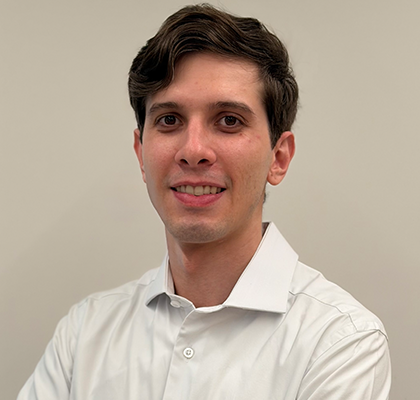
CQF alumnus, Guilherme Stocco, is an Electronic Trading Analyst at BTG Pactual in São Paulo, Brazil. After graduating with a degree in Civil Engineering, he transitioned into a career in finance. We spoke to Guilherme about starting a quant finance career, what a typical working day looks like, and how the CQF enhanced his career.
What inspired you to pursue a career as a quant, and how did you get started?
I got a degree in civil engineering, mostly because my father had also done so. However, after graduating, I had many friends from university that went into finance, so that got me interested in the field. After making that decision, I wanted to learn more about finance, and that was when quant finance came into my life. I found so much literature about it - how to price everything and how to work with risk. There are definitions, assets, and practices that work all over the globe. If you can price one asset here in Brazil, you can also do so in Dubai or anywhere else. This was fascinating to me, and I wanted to go further.
How did the CQF program impact your career trajectory?
The CQF gave me so much exposure to literature and theoretical knowledge that I was not aware of. It provided so many frameworks for analysis, so now I find that every challenge has a path to its end.
Can you describe a typical working day in your current role and what do you enjoy the most about it?
In my current position I sit between trading and technology. I work in a technology team within the brokerage team, and we use systems to leverage ourselves to do prop trading. We provide liquidity for the markets, to retail, and to mostly ETFs.
My day starts by checking if our systems are working correctly. After that, I usually check to see if the data pipelines have worked to ensure that by the first trade when the markets open, our algorithms are up to date and will provide liquidity. Around midday, there is time for some research, to try new ideas, to check with my colleagues on what they are doing and what they have been thinking about the markets, and also to improve our infrastructure strategies.
After that, there is an important moment. Since we are market makers at BTG, we have to close the prices at the end of the trading day. After that we check the books to confirm that everything has worked out throughout the day.
So, that's the day of a kind of trader / quant developer / quant researcher. All of my colleagues have similar skills, so everyone can check on whatever one is doing. The thing I like the most is checking what other people are doing in my team because many trading ideas, strategies, and technologies come from these encounters.
What's the most interesting or challenging project you've worked on?
Last year I worked on a big project that was about risk management intraday. After new tariffs were imposed in Brazil, we had a lot of volatility and prices were up and down. We wanted to develop a strategy that would prevent us from taking on too much risk at those times. So, we created a volatility trigger. When the volatility trigger is activated by a market signal, we close our positions or widen the spread for our strategies - or many other things that you can do in finance to avoid risk. It helped us to avoid taking so many drawdowns throughout the day and it's still in place, along with other improvements.
The CQF helped me to bridge the gap between my academic knowledge and what I needed to know in my current position.
What skills or knowledge gained from the CQF do you find most valuable?
The CQF helped me to bridge the gap between my academic knowledge and what I needed to know in my current position. I work in a position which is between trading and technology, and the CQF gave me so many financial frameworks to solve problems and to think about the trading possibilities. It also taught me the risk frameworks that I use now across our strategies and our desks.
How are you using AI in your current role?
I use LLMs, mostly ChatGPT, Claude, and others like Codex – but mostly for personal productivity. When considering financial strategies, you have to remember something that people in data science always say: “dirty data goes in, dirty results come out.” So, I think it's preferable to have strategies that come from finance and not from an LLM; those typically work better. Aside from personal productivity, I use AI to refine strategies. After I have some kind of market signal, I refine, check assumptions, and look for missing ideas with the help of AI.
What do you think will be the next big topic for AI looking down the road?
Where I believe AI will influence markets, is in embedding information into prices. That's something that I have been thinking about. I believe the edge that AI gives in this field is more about today's speed of interpretation of very recent information - things that come from tweets or from other more formal sources of information such as corporate actions from companies, revenue releases, and so forth. This information, I believe, will come to prices more rapidly and more efficiently with the help of AI in the near future.
What advice would you give to someone looking to start a quantitative finance career?
I didn’t start my career in finance, and I do think my background helps in my position, so if you didn’t study finance at university, you definitely still have a place in the markets. I do believe that getting the certification from the CQF puts you ahead of other people in the market. So whatever background you come from, I do recommend the CQF because it will help you bridge the gap.
Find out more about careers in quantitative finance
Download the Careers Guide to Quantitative Finance to learn more about the typical skills needed and salaries earned across six quantitative finance career paths.